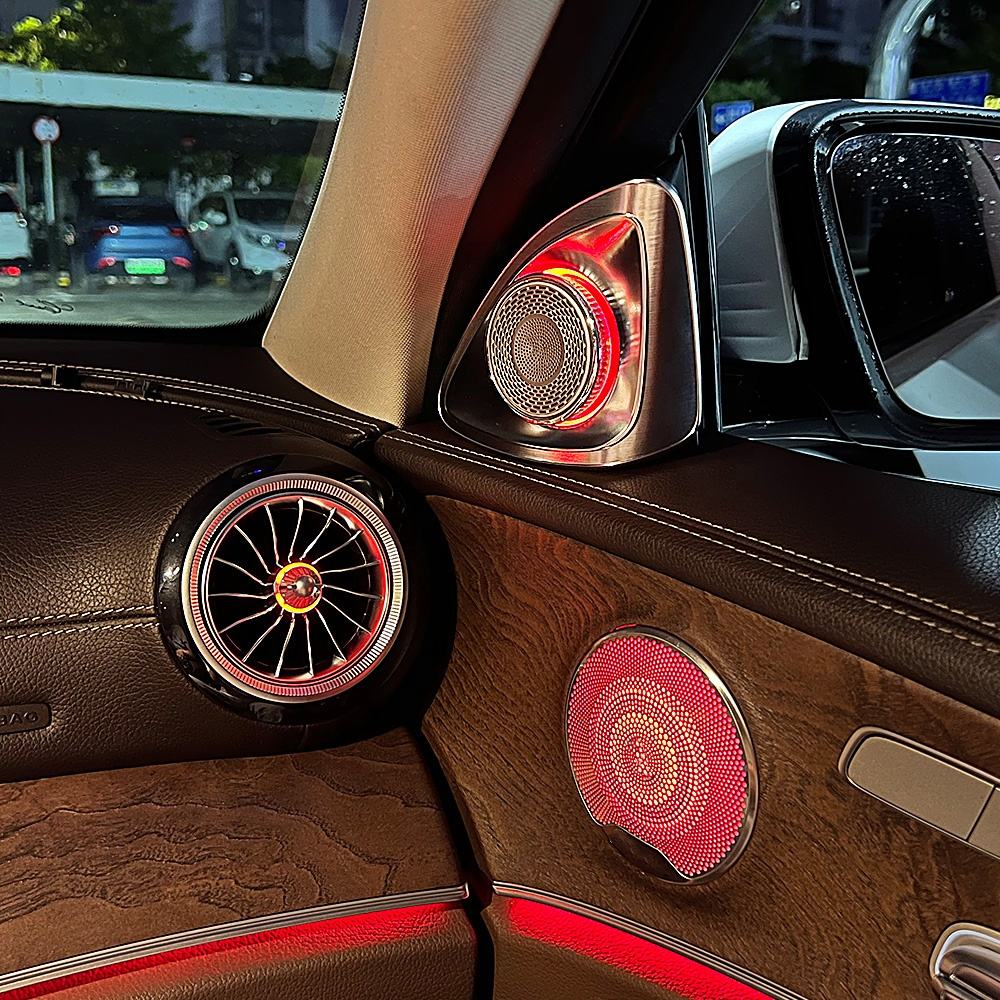
As automotive technology and luxury design continue to advance, interior atmosphere has become an important factor in defining vehicle quality. As the flagship model of luxury sedans, the Mercedes-Benz S-Class ambient lighting system combines visual design, intelligent technology, material engineering, and user experience concepts. Through carefully selected design elements and high-quality materials, the system creates a more refined, comfortable, and futuristic cabin environment.
In terms of design elements, Mercedes-Benz S-Class ambient lighting focuses first on seamless integration. Ambient lighting is not treated as an independent decorative component but is designed to work together with interior features such as the dashboard, door panels, center console, and cabin contours. Designers carefully consider lighting direction, installation position, and visual balance to ensure that the illumination blends naturally with the interior structure while maintaining the elegant character of a luxury vehicle.
Light performance is another essential design element. The system uses advanced optical engineering to create soft, continuous, and evenly distributed illumination. A high-quality ambient lighting system must avoid harsh brightness and visible hotspots by using light guide structures that spread illumination smoothly throughout the cabin. Color expression, brightness adjustment, and dynamic lighting effects are all designed around passenger comfort and overall experience.
Intelligent interaction is also a key part of the Mercedes-Benz S-Class ambient lighting concept. Modern ambient lighting systems provide more than illumination; they connect with vehicle electronic systems to support functions such as color adjustment, brightness control, and scene-based lighting interaction. Through intelligent design, the lighting can adapt to driving conditions and user preferences, creating a more personalized cabin atmosphere.
In terms of manufacturing materials, Mercedes-Benz S-Class ambient lighting mainly involves high-performance LED light sources, optical light guide materials, electronic control components, and structural support materials. LED light sources provide low energy consumption, high stability, and long service life, making them the core components for achieving premium lighting performance. Precision packaging technology helps maintain consistent light output.
Light guide materials directly influence illumination quality and visual effects. High-transparency and heat-resistant optical materials efficiently transmit light and are precisely processed to create continuous light strips. Durable plastic components and mounting structures help maintain system stability during long-term operation.
The electronic control module is another essential technical component. Control chips, circuit elements, and wiring systems work together to manage lighting functions and must provide strong durability and safety performance. Through strict testing procedures, the system can maintain reliable operation under various environmental conditions.
In the future, Mercedes-Benz S-Class ambient lighting will continue to advance through innovations in materials, intelligent control, and integrated design. By combining advanced design concepts with high-quality manufacturing technology, ambient lighting will become an even more important technological element in the luxury automotive cabin experience.